Compress Image to 20KB Online (Target Under 20 KB)

Compress image to 20kb directly in your web browser. 100% private, client-side execution with zero file uploads.

Upload Work Area

Drop images below, or click to pick them from your device

Specifications & Usage Guidelines

Recommended For
  • SSC / UPSC Application Forms (Photos/Signatures)
  • Online Visa / Passport Registration Portals
  • Job Portals & Professional Resume Attachments
  • National ID cards upload (Aadhaar, PAN, Voter Card)
Pro Tips (20KB Target)
  • Crop away background before compressing. Fewer pixels to encode means the 20KB budget is spent on the subject.
  • The file comes back in the format you uploaded. A PNG loses colours rather than quality, so upload a JPEG if the target is tight.
  • Aim a little under the published limit. Some portals count a kilobyte as 1000 bytes, not 1024.

Compress Image to 20KB Online (Target Under 20 KB) - Overview & Best Practices

The 20KB file size limit is the single most common image constraint encountered across national competitive examinations, civil service applications, and banking recruitment portals. Examination authorities including the Staff Selection Commission (SSC), Union Public Service Commission (UPSC), and Institute of Banking Personnel Selection (IBPS) routinely specify that uploaded signatures must not exceed 20KB, while many regional portals cap candidate photographs at this exact ceiling. Exceeding 20,480 bytes triggers immediate form rejection: "File size must be between 10 KB and 20 KB."

ToolMela’s 20KB Image Compressor is engineered specifically to meet these compliance criteria. By processing images entirely in your local browser using client-side canvas technology, the tool removes extraneous metadata and applies precision quantization algorithms. You obtain an image that strictly satisfies server limits while preserving clear facial landmarks and signature contours.

Enjoy zero bandwidth limitations, high-precision results, and seamless compatibility across all devices and operating systems.

Why Use Our COMPRESS IMAGE TO 20KB Tool

Strict Boundary Compliance

Submitting an application for national competitive exams is high-stakes. A rejected photo or signature upload can cause applicants to miss application deadlines

Optimized Quality Retention

The 20KB limit exists because national testing agencies process millions of applicants simultaneously. Restricting signatures and photos to under 20KB prevents

Zero Cloud Storage Privacy

All operations execute locally in your browser memory; confidential identity files never leave your device.

Instant Mobile Compatibility

Access and process files directly on Android, iOS, Windows, and macOS without downloading apps.

How to Compress image to 20kb Step by Step

1
Upload Image

Drag and drop your passport photo or signature into the upload box, or click "Select Image".

2
Review Automatic Compression

The engine instantly analyzes the original image and adjusts quantization tables to hit a file size under 20KB.

3
Verify Dimensions and Clarity

Check the real-time preview to confirm that facial contours, eyes, or handwritten signatures remain clear and legible.

4
Adjust Sliders if Desired

Use the quality slider to increase sharpness or reduce the file size further if your portal requires a 10KB–20KB range.

5
Download Your File

Click "Download Image" to save the optimized file instantly to your device.

Technical Compression Breakdown

Stripping Header Bloat

Camera files contain between 5KB and 60KB of non-visual metadata—including EXIF orientation tags, camera serial numbers, color space profiles, and thumbnail caches. Stripping these non-essential markers in your local browser frees up 25% to 50% of your 20KB budget before any pixel compression even starts.

Optimal Pixel Dimension Mapping

A standard passport photo measuring 3.5×4.5 cm requires approximately 200×230 pixels at 150 DPI. Storing a 200×230 pixel 24-bit image in uncompressed RGB takes approximately 138 KB. Compressing 138 KB down to 18 KB requires a compression ratio of only roughly 7.6:1. This mild ratio allows the JPEG encoder to preserve clear facial features without noticeable block degradation.

Chroma Subsampling (420)

The human visual system has lower spatial acuity for color than for luminance. By downsampling chrominance channels by half horizontally and vertically, the compression engine preserves sharp luminance edges (such as eye contours and ink strokes) while reducing the total payload by up to 50%.

- Passport Photographs

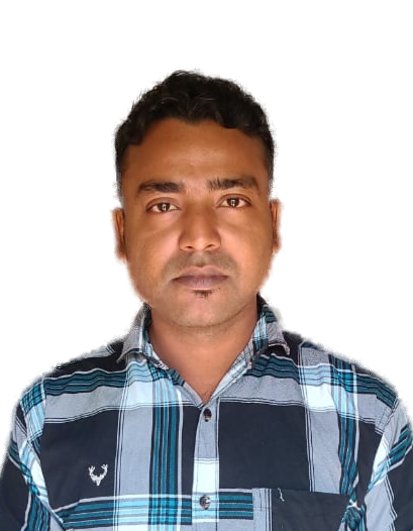
Facial features, hair borders, and clothing collars remain clearly defined. Skin tones show smooth gradation without severe posterization or color banding.

Best Practices and Expert Tips

  • Maintain Standard Aspect Ratios: For photos, crop to a 3.5:4.5 proportion before compressing. For signatures, crop to roughly 3:1 or 7:3 aspect ratios.
  • Use Good Lighting: Shadows across a signature or uneven lighting on a face force the compression algorithm to encode random gradient noise, wasting bytes. Ensure clear lighting across your subject.
  • Avoid Screenshots of Screenshots: Each screenshot introduces compression artifacts. Always start from your original camera capture or raw flatbed scan.
Common Issues and How to Solve Them

Problem: Portal rejects file as too large
Solution: Lower the quality slider slightly to ensure the file sits safely below the upper limit.
Problem: Text or contours look blurry
Solution: Increase the contrast of your source image so ink lines and text stand out sharply.
Problem: Portal requires exact pixel dimensions
Solution: Use dimension controls to specify exact width and height alongside file size limits.
Problem: File format not recognized by portal
Solution: Ensure the output format is set to universally accepted standard JPG or PNG.

Frequently Asked Questions

Which government portals mandate images under 20KB?
The 20KB limit is heavily enforced by SSC (Staff Selection Commission), UPSC, IBPS, state public service commissions, railway boards, and various university examination authorities for signatures and select portrait categories.
Can I compress an image to between 10KB and 20KB?
Yes. Portals commonly require: *"Size must be greater than 10 KB and less than 20 KB."* Our tool targets the 15KB–18KB range by default, ensuring your file sits safely within that bracket.
Will my passport photo be accepted if it is compressed to 20KB?
Yes, provided your original photo meets passport requirements (front-facing, plain background, neutral expression) and proper pixel dimensions (e.g., 200×230 px). The visual quality at 18KB–20KB is fully adequate for official verification.
Does compressing an image to 20KB reduce its physical print quality?
Yes, compressing from 5MB to 20KB removes redundant data. While it is not suited for large glossy prints, it is perfectly optimized for screen display, database records, and small 3.5×4.5 cm admit card prints.
Are my personal documents safe when using ToolMela?
Completely safe. All compression processing occurs inside your web browser’s memory using JavaScript. Your files are never uploaded to any remote server or stored in the cloud.
What should I do if my original photo is 10MB?
You can upload a 10MB photo directly. Our client-side engine automatically rescales the internal canvas and applies iterative quantization to bring it under 20KB in a single operation.
Why does my signature look distorted after compression?
Distortion typically occurs when users force non-matching width and height values. Ensure the "Maintain Aspect Ratio" lock is enabled, or crop the signature tightly before applying compression.
Can I compress PNG images to 20KB?
Yes, but the tool will convert the output to JPEG. PNG files rarely shrink below 20KB unless they contain very few colors, whereas JPEG achieves superior photographic detail at 20KB.

Explore Related Image & PDF Tools

ToolMela

Published by the ToolMela team

ToolMela is built and maintained by a small independent team in India. Every tool here is written and hosted by us rather than embedded from somewhere else, and the description on each tool page is written against what that tool's code actually does — including the badge telling you whether your file is processed in your browser or uploaded to our server. When a tool cannot do what its name promises, we switch it off and say so on the page instead of leaving the claim standing.